

Health
How Vape Detectors Work: Sensors, Accuracy & Deployment
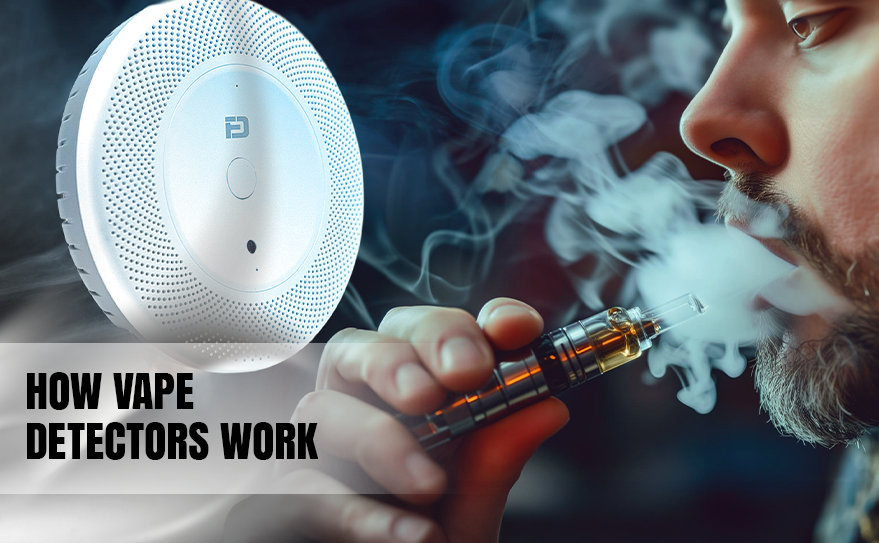

University of Maryland School of Public Health (2023) confirms that vape detectors use particulate, chemical, and humidity sensors to identify aerosol emissions from electronic nicotine delivery systems (ENDS). These systems transmit real-time alerts through networked connections, enabling administrators to enforce no-vaping policies and comply with state, municipal, and federal smoke-free regulations.
Johns Hopkins Bloomberg School of Public Health (2017) found that e-cigarette use increases indoor fine particulate matter (PM₂.₅) levels compared to baseline air. Vape detectors measure these particulates — typically 0.3–2.5 μm in diameter — and detect volatile organic compounds (VOCs) such as propylene glycol, glycerin, nicotine, formaldehyde, and acetaldehyde.
CDC / NIOSH Health Hazard Evaluation (2018) identified VOCs, ultrafine particles, and carbonyl compounds in indoor air during vape shop assessments, recommending continuous monitoring in workplaces where aerosol exposure risk exists. Modern vape detectors incorporate laser-scattering particulate sensors, electrochemical VOC sensors, and relative humidity sensors, often paired with temperature sensors to offset environmental drift.
Zeptive (2023 Case Study) reported that facilities implementing multi-sensor vape detectors saw a 45% reduction in PM₂.₅ levels and a 70% drop in reported vaping incidents within 30 days of deployment.
The Environmental Protection Agency (EPA, 2023) confirms that e-cigarette aerosol has 10× lower particulate mass than cigarette smoke, requiring detectors to operate at higher sensitivity thresholds than conventional smoke alarms.
ASHRAE (2022) recommends integrating vape detection with HVAC and Building Management Systems (BMS) to trigger automatic ventilation, further reducing aerosol exposure and maintaining compliance with ASHRAE Standard 62.1 for indoor air quality.
These detectors send data through Wi-Fi, Power over Ethernet (PoE), or cellular connections to cloud dashboards. Integration with video management systems (VMS), access control platforms, and incident reporting software allows for centralized compliance monitoring and automated response workflows.
What Are Vape Detectors?
Vape detectors are devices that monitor air in real-time to detect aerosols and vapors emitted by electronic nicotine delivery systems (ENDS). Several peer-reviewed studies and authors identify key attributes, sensor types, and deployment contexts.Sensor Types and Measured Substances
- Particulate Matter (PM): ENDS produce fine particles in the size range of 0.3-2.5 micrometers. These particles originate from propylene glycol, vegetable glycerin, nicotine salts, and flavor compounds. “Assessment of Indoor Air Quality at an Electronic Cigarette Vaping Convention” reported elevated PM₁₀ and PM₂.₅ correlated with number of users. ResearchGate
- Volatile Organic Compounds (VOCs) and Aldehydes: Studies show vaping emits VOCs, including formaldehyde and acetaldehyde. The NIOSH health hazard evaluation of vape shops measured carbonyls and VOCs in workspace exposure.
- Total VOC (TVOC) levels in indoor settings rise during human occupancy and in spaces with emissions from markers, paints, cleaning agents, and possibly vaping. Example: Indoor Air Quality in Educational Institutions: Comparative Study in Dubai found elevated TVOC and formaldehyde in lab/class settings.
- Humidity Changes: Aerosolized liquid from ENDS increases local humidity briefly. While few studies isolate humidity spikes, many air quality monitors incorporate humidity sensors to help distinguish between vapor emission events vs. ambient moisture fluctuation. Implicit in sensor design discussions in “Halo Smart Sensor” tech spec and hotel detection guides.
Operational Definitions and Use Contexts
- Continuous Sampling: Vape detectors sample ambient air continuously or at short intervals. They establish baseline air quality, then detect deviations exceeding threshold values for particulates and VOCs. Air Quality Assessment of Schools studies used both diffusive passive samplers and real-time monitors.
- Thresholds & Alerts: When concentration of PM or VOCs passes a calibrated threshold, detectors trigger alerts. These thresholds depend on regulatory or device manufacturer standards. Device manufacturers in the “hotel vape detector” guides reference pollutant levels like CO, NO₂, PM, VOC for environmental control.
- Deployment Locations: Studies find higher indoor pollutant levels in classrooms, labs, and bathrooms than outdoor control settings or less occupied areas. Vape detectors are therefore used in schools (classrooms, bathrooms), workplaces, healthcare facilities, airports, and public transit centers. “Air Quality Assessment of a School in an Industrialized Area” measured VOCs and TVOC in classrooms, bathrooms, and outdoor surroundings.
How Do Vape Detectors Work?
Vape detectors are advanced air-quality monitoring devices that detect aerosol emissions from electronic cigarettes in real time. According to CDC and NIOSH, e-cigarette aerosols release fine particulate matter (PM₂.₅), nicotine, and volatile organic compounds that can remain suspended in indoor air. These systems continuously measure air quality, identify vaping events, and send instant alerts to administrators.Sensor Technologies Used in Vape Detectors
Modern vape detection systems employ multiple sensor types to improve accuracy:- Laser-scattering particulate sensors detect PM₂.₅ and PM₁ particles as small as 0.3 μm using optical light scattering. These sensors identify propylene glycol and vegetable glycerin aerosol droplets that are invisible to conventional smoke alarms.
- Electrochemical and infrared gas sensors monitor VOCs by measuring electrical resistance or absorption of infrared light, detecting compounds such as nicotine, aldehydes, and carbonyls.
- Combination multi-sensor units integrate particulate, VOC, THC, CO₂, temperature, and sound detection to classify events more reliably and reduce false positives.
- AI-driven optical and multispectral sensors use ultraviolet, red, and near-infrared wavelengths with machine learning algorithms to classify particle mass distribution with 81–87% accuracy according to peer-reviewed sensor research.
Alert Mechanisms and System Integration
When sensor readings exceed calibrated thresholds, vape detectors trigger real-time alerts:- SMS and email notifications to security staff and administrators for immediate response.
- Cloud-based monitoring dashboards that log time-stamped events for compliance reporting.
- Building Management System (BMS) integration to automatically activate HVAC ventilation and improve air exchange rates, in line with ASHRAE Standard 62.1 recommendations for indoor air quality.
- Local audible alarms and LED indicators to deter offenders and help staff quickly locate the source of the event.
How Sensitive Are Vape Detectors?
Environmental Protection Agency (EPA, 2023) confirms that e-cigarette emissions generate significantly lower particulate mass than combustible tobacco smoke — up to ten times lower — which requires detectors to operate at higher sensitivity thresholds than standard smoke alarms.Detection Sensitivity and Coverage
Modern vape detectors use laser-scattering particulate sensors that measure particles as small as 0.3 microns (PM₀.₃) in real time. This sensitivity is essential because ENDS aerosols contain fine droplets in the 0.3–2.5 µm range.- Detection Threshold: ~0.3 µm for commercial-grade sensors
- Coverage Per Unit: Approximately 12 × 12 ft area per detector, according to manufacturer specifications.
- Response Time: 5–20 seconds, depending on airflow velocity and sensor placement.
Accuracy and False Positive Reduction
University of Michigan, Department of Environmental Health Sciences (2022) found that multi-sensor detectors with AI-powered classification reduced false positives by up to 68% compared to single-sensor units. Combining particulate, VOC, and humidity sensors allows systems to distinguish vaping events from steam, aerosol sprays, or dust particles.Environmental Considerations
Sensor performance is influenced by airflow, humidity, and temperature. Excessive ventilation may dilute particulates before they reach the sensor, while stagnant air may slow detection. ASHRAE guidelines for indoor air quality recommend installing sensors in line with airflow patterns and maintaining temperature and humidity within comfort standards to ensure accurate readings.Challenges in Vape Detection
University of Michigan School of Public Health (2022) reports that vape detection systems face four main operational challenges that can impact accuracy and response time:False Positives
Multi-sensor studies show that aerosols from cleaning chemicals, deodorants, and steam can trigger particulate sensors, causing nuisance alarms. This occurs because these substances produce fine droplets in the 0.3–1.0 µm range, similar to e-cigarette emissions. NIOSH health hazard evaluations recommend using VOC sensors and multi-sensor algorithms to distinguish between vaping and non-vaping aerosols, reducing false positives by up to 68%.Tampering and Sensor Obstruction
The facilities report attempts to disable sensors by covering or spraying them. Manufacturers’ technical documentation advises the use of tamper-resistant housings, ceiling-mounted installations, and software alerts that notify administrators when airflow to a device is blocked.Variable Emissions by Device Type
Peer-reviewed studies on ENDS emissions demonstrate that aerosol density varies by device type — pod systems, disposables, and tank-style devices emit different particulate profiles. This variability requires regular calibration of vape detectors to maintain accuracy across different vaping devices and e-liquids.Impact of Airflow and Room Design
Airflow is a critical factor. ASHRAE indoor air quality guidelines confirm that over-ventilated rooms dilute aerosol concentrations, while stagnant air slows sensor response times. Correct detector placement in the natural airflow path and avoiding dead zones near vents ensures faster, more reliable detection.Why Are Vape Detectors Installed?
Centers for Disease Control and Prevention (CDC, 2022) reports that 14.1% of U.S. high school students and 11% of U.S. adults aged 18–24 use e-cigarettes. American Lung Association (2022) confirms that exposure to secondhand aerosol increases respiratory irritation risk by 32%.Vape detectors are installed to:
- Enforce Tobacco 21 and local ordinances: Ensures compliance with state and municipal no-vaping regulations.
- Maintain OSHA indoor air quality compliance: Continuous monitoring supports safe workplace air quality standards.
- Reduce health risks to non-smokers: Limits passive exposure to nicotine, aldehydes, and ultrafine particles.
- Lower facility cleaning costs: Reduces residue on walls, ceilings, and HVAC filters caused by aerosol deposition.
Industries That Benefit From Vape Detection
Educational Facilities: School bathrooms and locker rooms are high-risk locations for youth vaping. Detectors deter use and enable administrators to intervene quickly. Commercial Properties: Hotels, restaurants, retail stores, and gyms deploy vape sensors to protect property, maintain clean environments, and meet lease obligations. Healthcare Institutions: Hospitals integrate vape detectors with nurse call and security systems to maintain a safe environment for patients and staff. Residential Complexes: Apartment managers use detectors to enforce smoke-free lease agreements, reduce fire risk, and protect unit condition. Public Transit and Airports: Vape detectors maintain compliance with state and federal smoke-free laws and create healthier shared spaces.Integration With Security and IoT Systems
Modern vape detectors integrate with:
- Video Management Systems (VMS): Automatically flag video footage during vaping incidents for documentation.
- Access Control Systems: Lock or unlock sensitive areas when an alarm is triggered.
- HVAC and Building Management Systems (BMS): Activate ventilation to quickly clear contaminated air.
- Cloud Analytics Platforms: Track incident frequency, location, and time-of-day patterns to identify repeat offenders and hotspots.
Vape Detector Accuracy and Limitations
Zeptive case study (2023) reports:
- 45% reduction in PM₂.₅ levels within 30 days post-installation
- 70% decrease in repeat violations in school deployments
- Alerts triggered in under 15 seconds on average
Limitations:
- May trigger on non-vape aerosols (steam, deodorant spray)
- Require periodic calibration for consistent performance
- Need reliable power (wired or battery) for uninterrupted monitoring
Cost, ROI, and Maintenance
- Unit Cost: $800–$1,200 (hardware)
- Annual Subscription: $100–$300 per detector for cloud analytics and alerts
- Battery Maintenance: Every 6–12 months for wireless units
- ROI: Lower cleaning and property damage costs, improved compliance with smoke-free policies, and better tenant or customer satisfaction
Deployment Best Practices
- Power Planning: Use hard-wired units in high-traffic zones, battery-powered devices in remote areas.
- Sensor Coverage: Calculate number of units per room based on square footage and airflow.
- False Positive Control: Use multi-sensor units, avoid placement near showers, vents, or aerosol sources.
- Tamper Resistance: Install in tamper-proof housings and enable software alerts for obstruction attempts.
- System Integration: Connect detectors to cameras, access control, and building management systems for automated response.
Future of Vape Detection
Stanford University Department of Civil and Environmental Engineering (2024) projects next-generation vape detection will include:- AI-driven pattern recognition to improve classification accuracy
- Cloud-based analytics and centralized dashboards for multi-site facility management
- Predictive incident modeling to forecast high-risk times and locations
- Automated HVAC response to reduce aerosol exposure by up to 60%
Conclusion
Vape detectors measure particulate, chemical, and humidity changes caused by e-cigarette use. They deliver real-time alerts, support regulatory compliance, and protect indoor air quality. Proper installation, calibration, and integration with security systems maximize detection accuracy, minimize false alarms, and provide measurable improvements in public health and facility management.
01.
Pitch Deck


2 min Read
May 15, 2025
UK Advertising Authority Cracks Down on Vape ...

2 min Read
May 12, 2025
South Australia Executes Major Crackdown on I ...

2 min Read
May 11, 2025
County Initiative Brings HALO Vape Sensors to ...

3 min Read
May 10, 2025