

Guide
How the Future of Vape Detection Technology Uses AI and IoT to Fix Today’s Detection Gaps
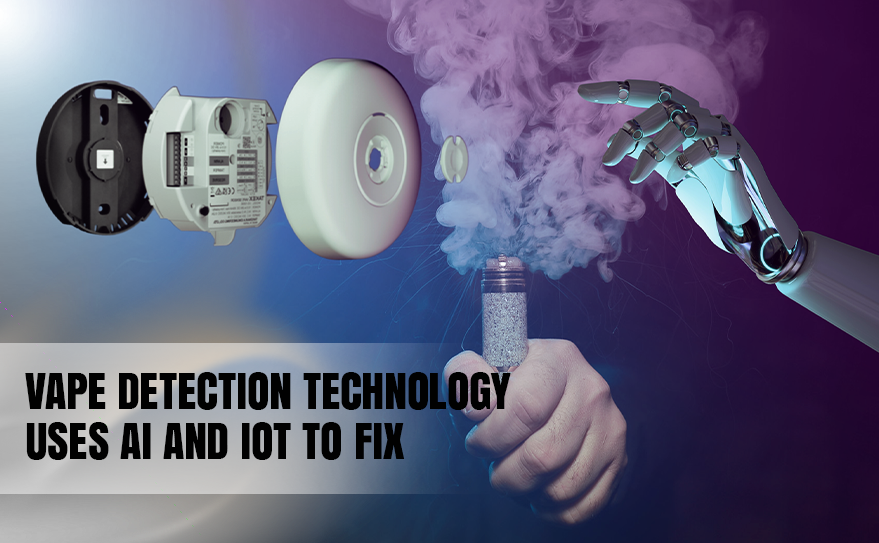

The Future of Vape Detection Technology is shaped directly by the scale of vaping in schools, universities, workplaces, and public facilities. The problem is measurable and documented in large national surveys. The 2024 National Youth Tobacco Survey, conducted by the U.S. Food and Drug Administration and the Centers for Disease Control and Prevention, reported that 5.9 percent of middle and high school students, about 1.63 million adolescents, currently use e cigarettes.U.S. Food and Drug Administration E cigarettes remain the most commonly used tobacco product in this age group.
Adult use also contributes to indoor exposure. An analysis from the U.S. National Center for Health Statistics reported that 6.5 percent of adults used e cigarettes in 2023, with prevalence reaching 15.5 percent among adults aged 21 to 24 years. These figures show that vaping is present in campuses, offices, retail environments, and shared housing.
This prevalence affects indoor air quality. A study by Li and colleagues, published in 2020, investigated vape shops and found that e cigarette use increased particulate concentrations and volatile organic compounds in both the shop and nearby environments. The study concluded that e cigarette aerosols can accumulate indoors and that workers and bystanders experience measurable exposure.
These data explain why administrators, facility managers, and security directors seek more advanced vape detection technology, and why attention is now moving toward AI vape detection, IoT vape detection, and smart vape sensors.

This structure helps buyers ask targeted questions and request documented performance tests before purchase.
What detection gaps exist in current vape detectors and monitoring practices?
Current vape detectors help, but measurable gaps remain in accuracy, coverage, and context. These gaps appear in three main areas.How do false positives and false negatives appear in vape detection accuracy?
Many early generation systems use simple thresholds for humidity or particulate matter. They often cannot distinguish aerosol from showers, deodorants, or cleaning sprays. A technical guide on vape sensors from a major security manufacturer notes that traditional sensors may misclassify non vaping aerosols, especially in restrooms and locker rooms where humidity and fragrances fluctuate. Machine learning work on indoor smoking detection shows similar issues. A 2025 study on indoor smoking detection using machine learning highlighted that sensors focused only on total volatile organic compounds and carbon dioxide can confuse cooking events and cleaning products with combustion or aerosol events when no higher level model is used to interpret the signals. The same principle applies to e cigarette aerosol. This leads to:- False positives that trigger alarms without vaping
- False negatives when small or short puffs blend into background noise
How does slow or fragmented real time vape detection create operational gaps?
In many facilities, vape sensors operate in isolation. Devices may provide local audible alerts but no unified view. Without an integrated system, administrators cannot see patterns across floors, wings, or buildings. IoT research on air quality notes that non networked monitors cannot support real time analytics or predictive responses. A 2025 paper on IoT based indoor air quality systems by Yildiz and colleagues found that networked sensors allowed real time dashboards and trend analysis, while standalone devices did not support advanced functions such as anomaly detection and early warning. Without full IoT integration, real time vape detection remains local and reactive, not strategic.How does the lack of indoor air monitoring context reduce decision quality?
Indoor environments vary by room size, ventilation rate, occupancy, and materials. A single sensor reading without context provides little decision value. Work on IoT based air quality monitoring systems shows that data quality, calibration, and spatial coverage are central factors in reliable interpretation. If vape detectors do not consider context, alerts can be misread or ignored. These gaps define the baseline that the Future of Vape Detection Technology must improve.How does AI change the core of vape detection technology?
AI changes vape detection technology by turning raw sensor data into structured decisions. The primary shift comes from machine learning models that learn characteristic patterns of vape aerosol.Which AI techniques are relevant to AI vape detection?
Recent reviews on artificial intelligence in air pollution monitoring show that supervised learning methods such as random forests and gradient boosting models achieve high accuracy when trained on sufficiently rich sensor data. A 2024 review by Chadalavada and colleagues reported that random forest models reached up to 98.2 percent accuracy for air quality classification tasks in selected datasets. These methods can be adapted for AI vape detection:- Random forests to classify events as vaping or non vaping
- Support vector machines to separate aerosol signatures
- Neural networks to model complex non linear sensor relationships
- Anomaly detection algorithms to highlight unusual patterns in indoor air monitoring
What sensor features feed AI air quality models for vaping?
Modern AI air quality models for vaping can ingest multiple features from smart vape sensors:- Particle size distribution across several diameter ranges
- Short term changes in particulate concentration
- Presence of specific volatile organic compounds associated with e cigarette liquids
- Humidity and temperature shifts during exhalation events
- Decay rate of aerosol concentration after the event
How does AI improve vape detection accuracy compared with fixed thresholds?
Threshold systems treat every event above a line as suspicious. AI systems treat each event as a point in a complex pattern space. When trained on large datasets that include e cigarette puffs, showers, sprays, and cooking fumes, the model learns multi dimensional boundaries. Benefits include:- Fewer false positives from non vaping aerosols
- Fewer false negatives from small vaping events
- Consistent classification across different rooms and buildings
- Adaptation over time through retraining with new data
How does IoT architecture transform vape detection into a building wide system?
IoT vape detection connects smart vape sensors into a unified network. The architecture uses gateways, cloud services, and dashboards.What are the main layers of IoT vape detection networks?
A typical IoT architecture contains four layers.- Device layer Smart vape sensors record particulate, gas, humidity, temperature, and related data.
- Gateway layer Gateways aggregate data from multiple sensors using Wi Fi, Ethernet, or specialized protocols.
- Cloud or server layer An analytics platform applies AI models, stores historical data, and manages alerts.
- Application layer Dashboards and mobile applications display incidents and support reporting.
How does IoT enable real time vape detection and response?
Detection Network
- Room Sensors ↓
- Floor Controller ↓
- Building IoT Gateway ↓
- Cloud Analytics Engine ↓
- Web and Mobile Dashboards
- Time stamped alerts with room location
- Short descriptions such as probable nicotine vaping or probable THC vaping where supported
- Event severity based on concentration and duration
- Historical context for that location
- First event in a new location triggers observation.
- Repeated events over several days trigger additional supervision or environmental checks.
- High frequency events can inform policy reviews.
How do smart vape sensors work at the hardware level?
The Future of Vape Detection Technology relies on improvements in smart vape sensors. These devices integrate multiple sensing elements in compact enclosures.Which sensor types are common in vape detectors?
Smart vape sensors may include:- Optical particle counters that use laser scattering to measure particulate size and concentration
- Metal oxide semiconductor gas sensors that respond to volatile organic compounds
- Environmental sensors for temperature, humidity, and pressure
- Sometimes, microphones for non recording acoustic events such as loud disturbances
How do these sensors differentiate vape aerosols from other indoor particles?
Differentiation depends on pattern recognition. Vape aerosols show characteristic:- Particle size distributions concentrated in specific ranges
- Rapid appearance and decay over short time windows
- Associations with particular gas signatures linked to propylene glycol and glycerin
How do AI and IoT together fix the main detection gaps found today?
The combination of AI and IoT addresses the three main gaps described earlier: accuracy, coverage, and context.How does the combination improve vape detection accuracy?
AI models act on the rich data from smart vape sensors. Networked deployment multiplies the data volume. This leads to:- Classification models that see diverse real world conditions
- Reduction of false positives because the model has examples of non vaping aerosols
- Improved vape detection accuracy as the training set grows
How does IoT coverage eliminate blind spots?
IoT networks allow installation of vape detectors in restrooms, stairwells, locker rooms, dormitory corridors, and staff areas. All devices report centrally. Locations that were previously unmonitored now contribute data to the overall picture. Reports by journalists covering school deployments have noted that some districts install dozens of devices across several buildings, resulting in tens of thousands of alerts over months, which provides detailed insight into event frequency by location and time. This level of coverage is only manageable with IoT based central dashboards.How does integrated context improve indoor air monitoring and decision making?
Combined AI and IoT systems provide context in three dimensions.- Temporal context When a school or workplace observes a spike in incidents after schedule changes or policy updates, leaders can measure the effect.
- Spatial context Repeated events in specific bathrooms or lounges indicate environmental or behavioral drivers.
- Policy context Incident counts over semesters or fiscal years can be compared against education or cessation initiatives.
How do school vape detection systems evolve with AI and IoT?
School vape detection systems represent one of the most visible use cases for the Future of Vape Detection Technology. Schools face regulatory pressures, parental expectations, and student health concerns.Why do schools adopt advanced vape detection technology?
Youth vaping raises specific health and learning risks. Health authorities point out that adolescent brains are more sensitive to nicotine, and that vaping can affect attention, mood, and impulse control. These concerns motivate administrators to improve supervision in camera free spaces. At the same time, school leaders face resource constraints and privacy obligations. The attraction of AI and IoT systems lies in their ability to monitor air quality without cameras and to provide real time vape detection across many locations.How will AI and IoT change school vape detection systems in the next years?
Developments likely include:- Predictive analytics for incident risk Models will estimate which locations and time periods carry higher vaping risk, based on previous incident patterns.
- Integration with student support workflows Incident logs can be used to trigger counseling referrals instead of only disciplinary responses, when policy and law allow.
- Transparent reporting to stakeholders Dashboards can provide aggregated, anonymized statistics for boards, parents, and regulators.
- Refinement of alert thresholds by building zone Airflow and occupancy differ between wings. AI can adapt thresholds and expectations by zone.
How does the future of vape detection technology apply to workplaces and public facilities?
The Future of Vape Detection Technology is not limited to schools. Hospitals, airports, transport hubs, malls, and offices also face vaping incidents.What operational benefits does vape detection bring to workplaces?
Workplaces use vape detection technology to:- Maintain compliance with indoor air and smoke free policies
- Protect sensitive environments, such as laboratories and clean rooms
- Reduce odor and aerosol complaints from staff or visitors
- Support health and safety certifications that require indoor air monitoring
How can AI vape detection integrate with existing building systems?
Future systems will integrate more deeply with building management systems and security platforms. Examples include:- Passing incident data into access control or visitor management systems for correlation with occupancy
- Sharing air quality metrics with ventilation control for targeted airflow adjustments
- Linking vape detectors with incident management platforms used by facility teams
How can decision makers evaluate vape detection accuracy, cost, and risk when planning deployments?
Executives, facility managers, and technology buyers need structured criteria when choosing between systems.What metrics can be used to compare solutions?
Key metrics include:- Vape detection accuracy Percentage of correctly identified vaping events in controlled tests.
- False positive rate Percentage of non vaping events incorrectly labeled as vaping.
- Response time Time between aerosol event and alert delivery.
- Spatial resolution Ability to localize events to specific rooms or sections.
- Data quality and calibration support Procedures for sensor calibration, replacement, and validation.
- Integration capabilities Support for common IoT protocols and security systems.
How can a comparative view help?
The following table illustrates a generic comparison between traditional and AI plus IoT based approaches.| Aspect | Traditional vape detectors | AI and IoT based vape detection technology |
| Event classification | Fixed thresholds | Machine learning models using multi sensor data |
| Detection accuracy | Moderate, scenario dependent | Higher, when models are trained on rich datasets |
| False positives | More likely in humid or scented environments | Reduced through pattern recognition |
| Coverage | Local device coverage only | Building wide via IoT networks |
| Reporting | Limited logs, device local | Central dashboards with historical data |
| Adaptability | Static unless manually reconfigured | Adaptive through model updates and firmware changes |
| Integration | Often stand alone | Designed to integrate with building and security systems |
What trends will shape the Future of Vape Detection Technology over the next decade?
The Future of Vape Detection Technology will be influenced by advances in sensors, AI algorithms, IoT infrastructure, and regulatory frameworks.How will sensing hardware evolve?
Sensor research indicates a trajectory toward smaller, lower power, and more selective gas sensing devices. Smart gas sensor arrays, combined with AI, are expected to detect a wider range of compounds with improved stability and lower noise.For vape detection, this implies:- Better discrimination between liquid formulations
- Reduced drift over time
- Improved performance in high humidity environments
How will AI models for vape detection mature?
AI models will benefit from:- Larger and more diverse training datasets collected across countries and building types
- Transfer learning techniques that adapt general air quality models to vaping specific tasks
- Edge AI deployments where classification runs directly on devices for faster response and lower bandwidth use
How will IoT and cloud platforms change indoor air monitoring?
IoT monitoring platforms will likely:- Incorporate standardized APIs for data sharing between different vendors
- Provide built in analytics and visualization templates for vaping incidents
- Offer tools for policy compliance documentation and audit support
How will regulation and policy shape deployment?
Public health authorities continue to track youth vaping and its effects. Legal actions against manufacturers and distributors, especially those targeting minors, remain active.At the same time, school and workplace policies will refine rules for the use of vape detection technology, including governance of data retention, access, and use. Future regulatory guidance may address:- Acceptable performance standards for vape detectors
- Requirements for calibration and documentation
- Privacy impact assessments for monitoring in sensitive locations
How can stakeholders prepare for the Future of Vape Detection Technology today?
Stakeholders can prepare by building structured strategies that align health goals, policy objectives, and technological capabilities.What practical steps can schools, workplaces, and facility managers take?
Key steps include:-
- Assess current exposure and incident levels Use surveys, anonymous reporting, and any existing incident logs to understand the scale of vaping.
- Define clear objectives for vape detection technology Objectives may include reduction of incidents, improved enforcement of smoke free policies, or protection of sensitive areas.
- Evaluate AI and IoT readiness Review network capacity, security policies, and integration capabilities before large deployments.
-
- Request validated performance data Ask vendors for third party or peer reviewed evaluations of detection accuracy, false positive rates, and reliability.
-
- Integrate health and support services Align detection with cessation support and counseling, especially in educational settings.
-
- Monitor outcomes and adapt Use incident data, air quality trends, and stakeholder feedback to refine settings and policies over time.
How does this preparation connect to long term indoor air quality strategy?
Vape detection does not replace broader indoor air quality work. Instead, it complements:- Ventilation improvements
- General particulate and gas monitoring
- Occupant education on air quality and health
Conclusion
The Future of Vape Detection Technology is defined by the convergence of AI, IoT, and smart vape sensors. Present challenges in accuracy, coverage, and context are real, but documented advances in sensor arrays, AI based pattern recognition, and IoT based air quality platforms indicate that these gaps can be reduced. Evidence from youth and adult vaping surveys shows that vaping remains a widespread indoor behavior. Research on air quality and IoT systems shows that networked, multi sensor approaches deliver better data and more actionable insights than isolated devices.Work on smart sensor arrays confirms that AI enhanced hardware can discriminate complex gas and aerosol mixtures with high precision. For school administrators, facility managers, security directors, technology buyers, industry professionals, and the general public, the path forward involves careful evaluation, transparent governance, and integration with health centered policies. The future is not only about detecting vaping events. The future is about understanding indoor air, managing risks with evidence, and building environments that support health and learning.
01.
Pitch Deck

2 min Read
May 15, 2025
UK Advertising Authority Cracks Down on Vape ...

2 min Read
May 12, 2025
South Australia Executes Major Crackdown on I ...
2 min Read
May 11, 2025
County Initiative Brings HALO Vape Sensors to ...

3 min Read
May 10, 2025